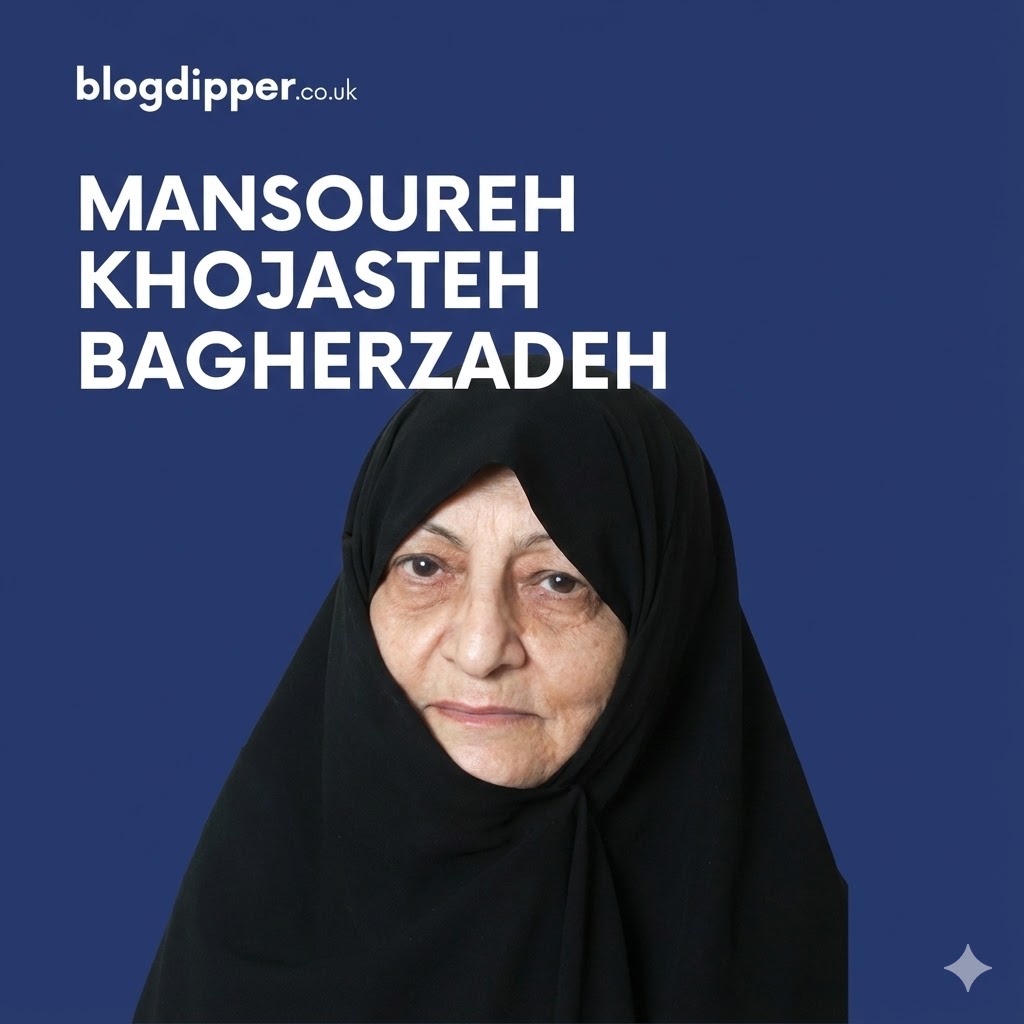
Mansoureh Khojasteh Bagherzadeh, a name not widely known outside Iran, is a woman whose life story is intricately woven into the fabric of Iranian politics and history. While her public visibility is minimal, her role as the wife of Ali Khamenei, Iran’s Supreme Leader, places her at the very heart of the country’s leadership. Despite her low-profile existence, Mansoureh’s life offers a unique perspective on the intersection of personal devotion, political power, and religious leadership in a nation that has undergone tremendous transformation.
Early Life and Background
Mansoureh Khojasteh Bagherzadeh was born in 1947 in Mashhad, a city in northeastern Iran that is considered a religious center. Growing up in a family that was deeply rooted in both the religious and merchant classes, Mansoureh’s early years were shaped by the values of faith, tradition, and family. The Khojasteh Bagherzadeh family had significant influence in the region, with her father being a well-respected businessman within the local bazaar (market) community.
While little is known about her formal education or childhood, her family background suggests that she was exposed to the intersecting worlds of commerce and religion from an early age. This combination of influences would shape her views and the values she would later pass on to her children, particularly in the context of Iran’s political and religious upheavals.
Mansoureh Khojasteh Bagherzadeh Marriage to Ali Khamenei: A Life Shaped by Politics
Mansoureh’s marriage to Ali Khamenei, who would go on to become Iran’s Supreme Leader, marked the beginning of a life lived in the shadow of political and religious power. The couple married in 1965, just a few years before the Iranian Revolution would shake the country to its core. While Khamenei was not yet the influential figure he would later become, their marriage occurred during a period of rising political activism, particularly among the clerical class in Iran.
At the time, Khamenei was already active in political opposition against the ruling Pahlavi regime. However, much of Mansoureh’s life during these years remains shrouded in privacy. Despite the public nature of Khamenei’s later role, Mansoureh has consistently maintained a low profile. She has rarely made public appearances or spoken to the press, and her life has remained largely private, even as her husband’s political influence grew exponentially.
Life After the Revolution: The Role of the First Lady
Following the Iranian Revolution of 1979, Khamenei’s political fortunes soared, and he became one of the leading figures in the newly formed Islamic Republic. After the revolution, he was appointed as the president of Iran in 1981 and served in that role until 1989 when he became Supreme Leader. Throughout this period, Mansoureh remained in the background, fulfilling her role as a supportive wife and mother.
Despite the high-profile nature of her husband’s position, Mansoureh’s role as First Lady was not one of public visibility. Unlike the wives of leaders in many Western countries, she did not take on ceremonial duties or engage in public advocacy. Instead, she focused on her family, maintaining a private and stable home life amidst the political turmoil of the 1980s.
It was only after Khamenei’s appointment as Supreme Leader in 1989 that Mansoureh’s life took on a more symbolic importance. As the wife of the Supreme Leader, she became the unofficial First Lady of Iran, but she did not assume any public or ceremonial duties. Her role as the spouse of the country’s leader was one of quiet influence and support, with her presence largely confined to her family and religious duties.
Mansoureh Khojasteh Bagherzadeh Family Life: A Quiet Strength Behind the Leader
Mansoureh and Ali Khamenei have six children: four sons and two daughters. The couple’s children, like their father, have kept a low profile in the public sphere, and little is known about their personal lives or careers. The Khamenei children, however, are often described as being involved in religious or political spheres, though their exact roles and positions within the Iranian system remain private.
Despite the family’s proximity to the highest levels of power in Iran, Mansoureh has remained largely out of the public eye. This decision to keep her life private is consistent with the conservative values of the Khamenei family, which prioritize modesty, religious observance, and family life over public exposure. As a mother and wife, Mansoureh’s focus has always been on maintaining a stable, religiously grounded home life for her children, away from the distractions of public politics.
Public Perception: The Quiet Spouse of a Supreme Leader
Mansoureh Khojasteh Bagherzadeh’s public image is one of quiet dignity and religious devotion. Unlike the wives of many other world leaders, Mansoureh has not sought the limelight. She has not been involved in high-profile public campaigns or social initiatives, and her face is rarely seen in the media. This privacy is in stark contrast to the public visibility of her husband, who is one of the most powerful figures in Iran and one of the longest-serving political leaders in the world.
For many in Iran, Mansoureh is seen as the epitome of traditional femininity and religious piety. She has never sought to carve out a public role for herself, instead opting for a life of devotion to her family and her faith. This is in keeping with the ideals of modesty and humility that are central to the Khamenei family’s public image and the broader religious values of the Iranian political system.
However, her low public visibility has also led to speculation about her role in Iran’s political life. Some have questioned whether her influence behind the scenes has been more significant than her public profile suggests. Others have criticized her silence during periods of political and social turmoil, particularly given her husband’s central role in shaping Iran’s policies. Despite these questions, Mansoureh remains an enigmatic figure, whose life is largely defined by her private role as a wife and mother rather than by any public accomplishments or political affiliations.
The Role of Women in Iran’s Political System: Mansoureh Khojasteh Bagherzadeh Symbolic Role
Mansoureh Khojasteh Bagherzadeh’s life underscores the complex role of women in Iran’s political system. While she has not been an active participant in public political life, her position as the wife of the Supreme Leader has granted her a level of influence and respect within the Iranian system. However, her role is symbolic rather than overtly political.
In Iran’s political system, women are often expected to fulfill traditional roles within the family, and their involvement in public life is often limited. Mansoureh’s decision to remain out of the public eye aligns with these cultural and religious norms, which prioritize family life and modesty over political engagement. Her life serves as a reminder of the challenges faced by women in Iran, particularly those who occupy powerful positions through their familial ties rather than their individual achievements.
At the same time, Mansoureh’s role highlights the broader patriarchal structure of Iranian politics, where power is often passed down through familial lines rather than through democratic processes. While her life may not be marked by public achievements, her position as the spouse of the Supreme Leader places her at the heart of one of the most powerful families in Iran.
The Khamenei Legacy: Mansoureh Khojasteh Bagherzadeh Place in History
As Iran continues to navigate its complex political landscape, Mansoureh Khojasteh Bagherzadeh’s role in the country’s history remains subtle but significant. While her public profile may remain low, her position as the wife of Iran’s Supreme Leader places her at the center of the country’s political and religious leadership. Her life reflects the intersection of faith, family, and power in Iran’s political system, and her legacy will likely be defined by her quiet influence rather than by any overt political role.
Mansoureh’s story also highlights the ways in which women in Iran are often expected to play behind-the-scenes roles, supporting their husbands and families without seeking the public attention that many of their male counterparts enjoy. Her life serves as a reminder of the complex gender dynamics that shape Iran’s political system and the role that women can play, even when they are not in the public spotlight.
Conclusion
Mansoureh Khojasteh Bagherzadeh’s life may not be marked by public achievements or political notoriety, but her role as the wife of Iran’s Supreme Leader places her at the heart of the country’s political and religious leadership. Her quiet strength, religious devotion, and focus on family life have defined her existence, and her legacy will likely be one of private influence rather than public fame. In a political system where power is often passed down through familial ties, Mansoureh’s life serves as a reminder of the importance of tradition, family, and faith in shaping the course of a nation.
As Iran moves forward in an increasingly complex geopolitical environment, the role of figures like Mansoureh will continue to be a point of reflection — not for their public accomplishments, but for the quiet ways in which they help shape the legacy of their families and their country.